Mining is objectively one of the most lethal industries on the planet. US Bureau of Labor Statistics data shows fatality rates hitting 32.5 per 100,000 workers in coal sectors, with transport-related accidents as the primary killer. Globally, we are looking at 15,000 reported injuries annually. The financial fallout of a single serious event? Often north of $4 million once you tally medical bills, wrecked gear, and the inevitable legal drain.
A massive chunk of these incidents involves heavy tonnage—haul trucks, dozers, and excavators—handled by operators who simply haven’t built the “gut instinct” for 200-tonne machines. This isn’t negligence. It’s a failure of old-school training methods that put rookies behind the wheel of multi-million dollar assets and hope for the best.
Virtu’s VR-based heavy vehicle programme is designed to break this cycle by moving the “rookie mistakes” into a virtual pit.
The Financial Burn of Traditional Onboarding
Training a heavy equipment operator is a massive capital drain. Beyond the $5,000 to $20,000 fee per head, the hidden costs are what kill the budget:
- Fuel Consumption: A large hauler drinks roughly 200 litres of diesel per hour.
- Asset Wear: Daily usage fees for training equipment range from $50 to $200.
- Mechanical Risk: One mistimed turn can total a machine valued in the millions.
But the human cost is steeper. MSHA data confirms that inexperienced workers face disproportionately higher fatality rates. Powered haulage and material handling account for nearly half of all mining injuries. This is exactly where inexperience hits the hardest.
Why VR Actually Works: The Data
The move to VR isn’t just about being “high-tech.” It’s a data-driven survival strategy.
- Safety Awareness: A study in Scientific Reports found a 30% jump in safety awareness and risk perception after VR immersion.
- Knowledge Retention: Immersive sims lead to a 45% improvement in retention over old-school lectures.
- Operational Speed: Industry giants like BHP saw onboarding accelerate by 40%. Other sites reported an 82% drop in accidents within a year of deployment.
The Virtu Four-Stage Pipeline
Operating a 150-tonne truck is nothing like driving a forklift. The startup sequence alone is a 20-step mechanical ritual. Virtu’s curriculum targets the four specific gaps where conventional training fails:
Stage 1: Mechanical Literacy Trainees study a 1:1 3D replica. They identify powertrains, hydraulic circuits, and braking systems. An operator who knows the “anatomy” of their truck catches mechanical failures before they lead to a fire or a crash.
Stage 2: The Inspection Reflex Skipped pre-shift checks kill people. In VR, trainees must physically navigate around the machine, checking fluid levels, tyre integrity, and brake pins. The system flags every missed check until the routine is muscle memory.
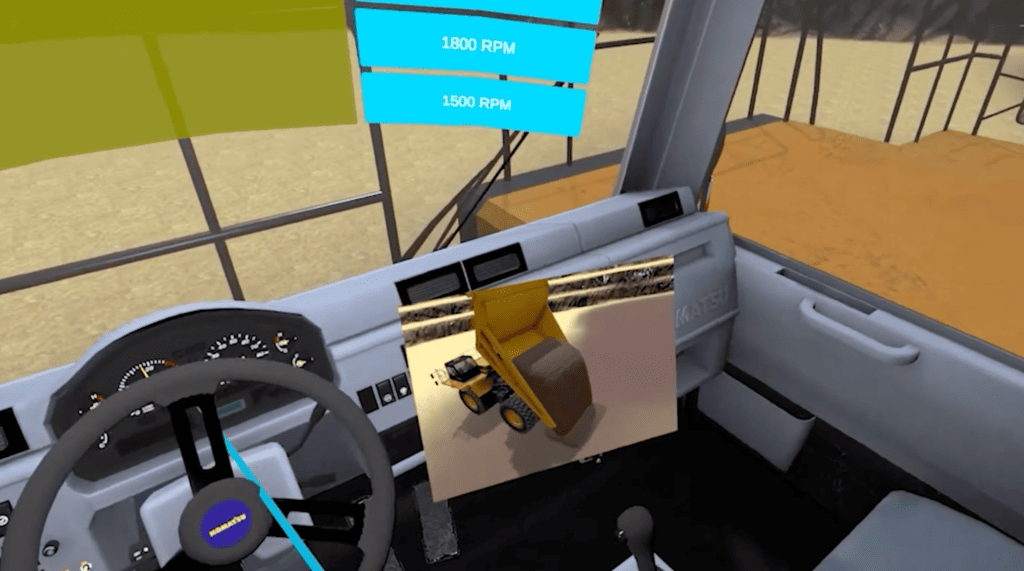
Stage 3: Cabin Command The Virtu platform replicates the cabin exactly. Joysticks, rocker switches, and digital displays are positioned to the centimeter. Trainees run the startup sequence until they can find every control without looking. This kills the “cognitive overload” that causes rookies to panic in the field.
Stage 4: Operational Stress Trainees are dropped into realistic mining scenarios. They load at the face, navigate steep haul roads with proper lane discipline, and react to sudden hazards like stalled vehicles or road blocks. Every steering input and throttle adjustment is logged.
Auditable Safety: The Dashboard
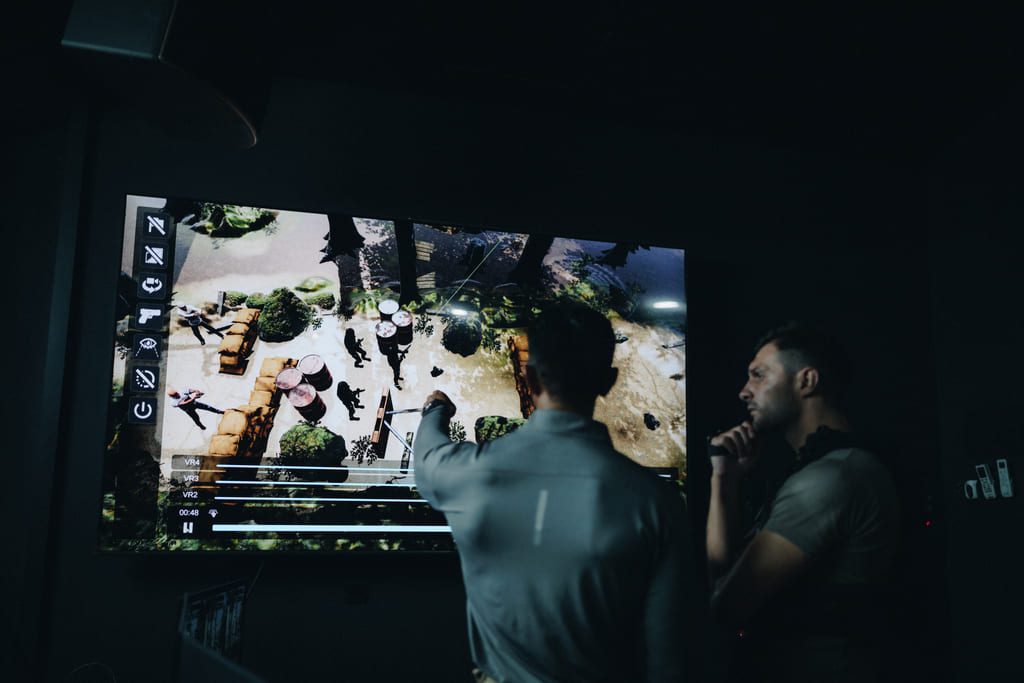
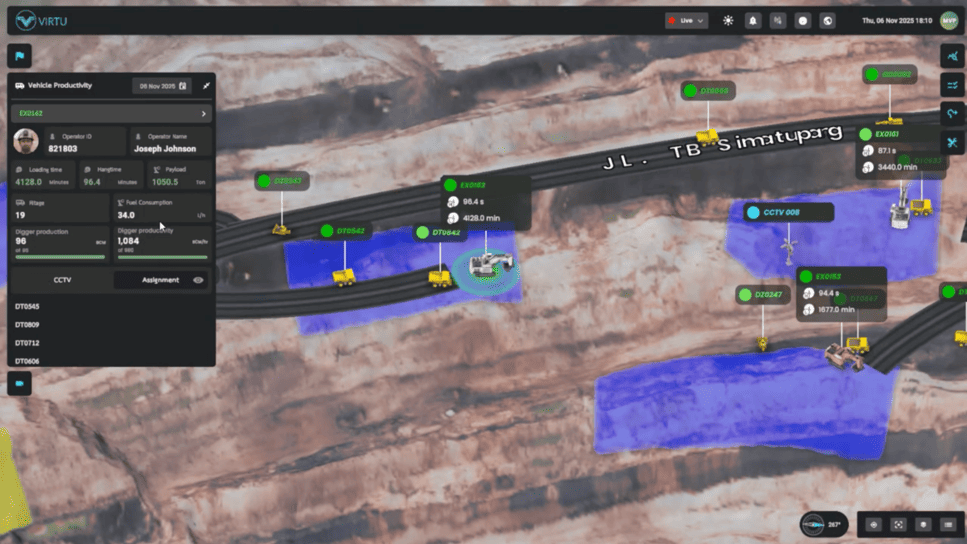
Virtu replaces the instructor’s “gut feeling” with a back-end analytics dashboard. It tracks:
- Error Frequency: Exactly where the trainee is failing.
- Time-per-Task: Are they rushing or being too slow?
- Procedural Compliance: Did they follow the SOP to the letter?
Supervisors get an auditable, evidence-based profile for every operator. You don’t clear a trainee for the field because they “seem ready”—you clear them because the data proves they are.
The Bottom Line
The financial case is three-fold:
- Zero Fuel/Wear: The training happens in a simulator, not on a $3 million hauler.
- Velocity: 40% faster onboarding means operators are productive weeks sooner.
- Risk Mitigation: Fewer accidents mean lower insurance premiums and zero regulatory fines.
For mining firms, the choice is simple: invest in VR-driven readiness or pay the price for the learning curve on the real equipment.