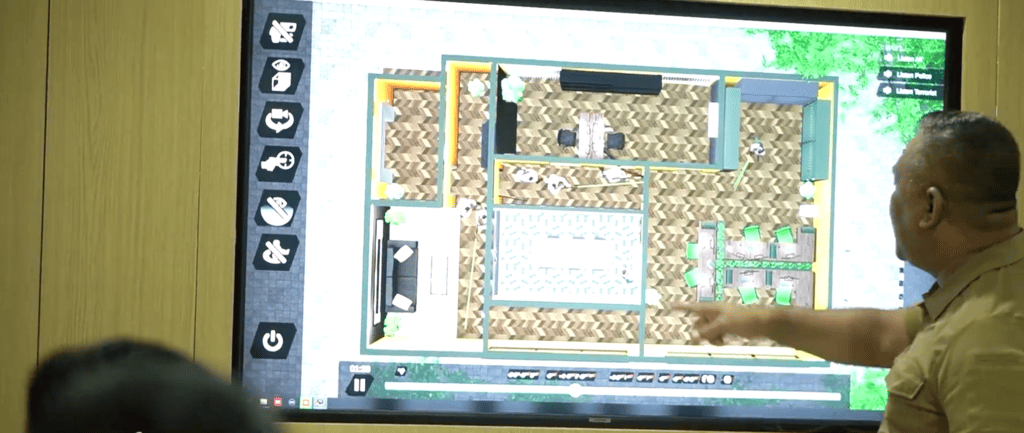
Modern warfare doesn’t wait for units to finish their training cycles. The battlefield evolves fast, but traditional military preparation is often stuck in a massive logistical bottleneck. Getting a tactical unit through complex live-fire exercises requires massive budgets, endless planning, and vast physical space. You end up with a dangerous gap in actual combat readiness. KOMINA is breaking this cycle entirely with its military-grade VR combat simulator, making world-class tactical training repeatable, brutally precise, and constantly accessible.
Killing the “Slow Iteration” Problem In military circles, there is a known issue: slow iteration. Live ammunition is incredibly expensive. Range time is scarce. Because of these hard constraints, operators usually only run high-intensity, worst-case scenarios a few times a year. When operators don’t practice under pressure constantly, perishable combat skills naturally begin to fade.
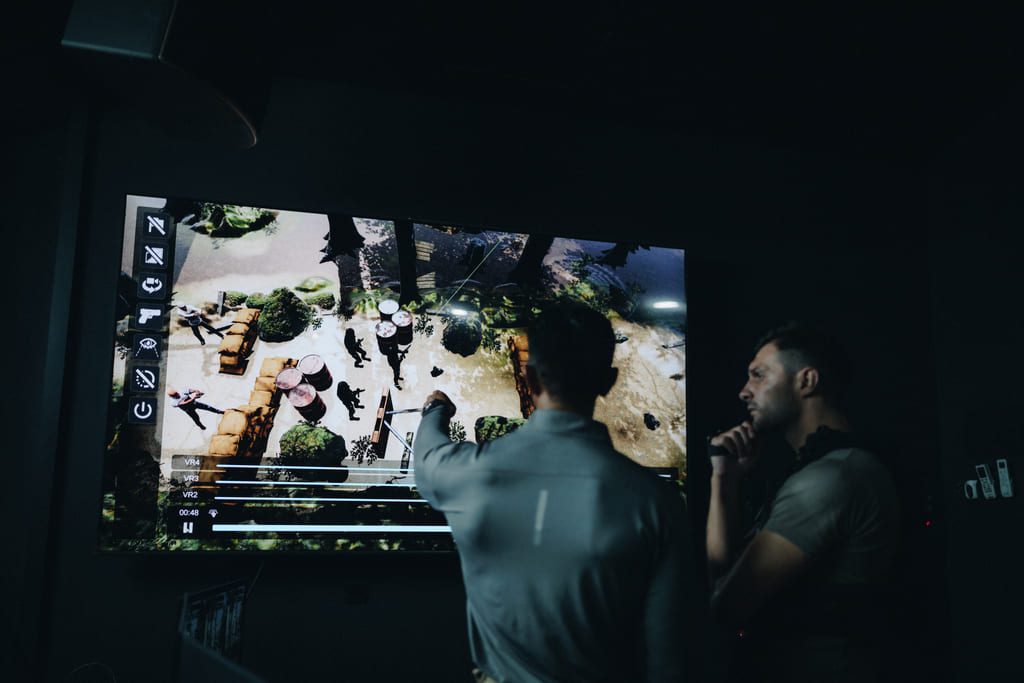
By pushing these drills into KOMINA’s virtual tactical arena, armed forces can facilitate high-frequency iteration. Operators aren’t just running ambush drills or room-clearing exercises once a quarter. They can run them daily. This sheer volume of repetition builds the raw, instinctual muscle memory required to survive in the field.
The Three Pillars of Virtual Combat Training
1. Unforgiving Tactical Environments Modern conflicts rarely happen on a flat, empty shooting range. They happen in cramped, unpredictable urban centers or complex terrain. KOMINA utilizes hyper-realistic digital twin environments—ranging from dense city blocks to isolated outposts—to sharpen an operator’s edge.
- Split-Second Threat Identification: The simulation forces personnel to read chaotic environments, identifying subtle behavioral cues and potential hazards amidst civilian presence.
- Dynamic Rules of Engagement (ROE): Operators must navigate strict ROE under immense stress. Virtual combatants react dynamically, forcing troops to master the vital transition from verbal commands to lethal action in a split second.
2. Data-Driven Combat Competence A massive challenge for military commanders is ensuring every operator meets the exact same standard of lethal proficiency. Traditional drills often rely heavily on an instructor’s subjective observation. KOMINA replaces that guesswork with hard data.
- Objective Analytics: Performance is judged by cold metrics. The system tracks reaction speed, exact shot placement, and procedural adherence, entirely eliminating human bias from the evaluation process.
- Real-Time Unit Monitoring: Commanders can pull up the performance data of their entire squad simultaneously. If a specific operator is lagging in reaction time or accuracy, leaders can pinpoint the issue and order targeted retraining immediately.
3. Bulletproof Training Budgets Physical military training is dangerously vulnerable to the fluctuating costs of resources. When fuel and ammunition prices spike, training hours usually get cut. As a strategic investment, KOMINA’s VR ecosystem provides an inflation-proof return on investment.
- Infinite Repetitions: Once the hardware is set up, the cost per training session plummets. Running a hundred virtual drills costs the exact same as running one.
- Resource Independence: By decoupling combat readiness from the physical cost of bullets and fuel, defence agencies can maintain a rigorous, punishing training schedule even during massive budget cuts.
The New Standard of Lethality Shifting from resource-heavy physical drills to a virtual ecosystem is not just a flashy technological upgrade. It is a strategic necessity. KOMINA’s platform ensures that military personnel are not merely checking a box on a training requirement sheet—they are actually mastering their craft. Uncapped repetitions. Uncompromising data. That is how modern forces build real combat readiness.
Conclusion: Safety Through Innovation
At KOMINA, we believe the future of national defense is found where human bravery meets digital precision. By providing the tools to train without limits, we are helping build a more prepared and secure society. We are no longer just teaching safety; we are making it a digital reality.