Every procurement conversation eventually comes down to the same question: is it worth it?
It’s a fair question. VR training platforms represent a real investment. The hardware is specialized. The software requires development and maintenance. There’s training time for instructors and setup time for facilities. Before a defense organization commits to a platform like KOMINA, they need to understand not just what the technology does — but what it delivers, measured against what it costs.
The answer, for organizations that have deployed KOMINA across their training programs, is unambiguous. And it extends significantly beyond the headline cost reduction figure.
Where the 60% Comes From
The 60% reduction in training costs that KOMINA-deploying organizations have reported isn’t a single-line saving. It’s the aggregate of several distinct cost categories being restructured simultaneously.
Ammunition and consumables. Live-fire training at meaningful scale requires enormous ammunition expenditure. A single high-intensity exercise for a platoon-sized unit can consume training budgets that would fund months of VR sessions. KOMINA’s virtual training eliminates this entirely for scenario rehearsal, reserving live fire for the terminal stages of qualification — the stages where real ammunition actually needs to be fired.
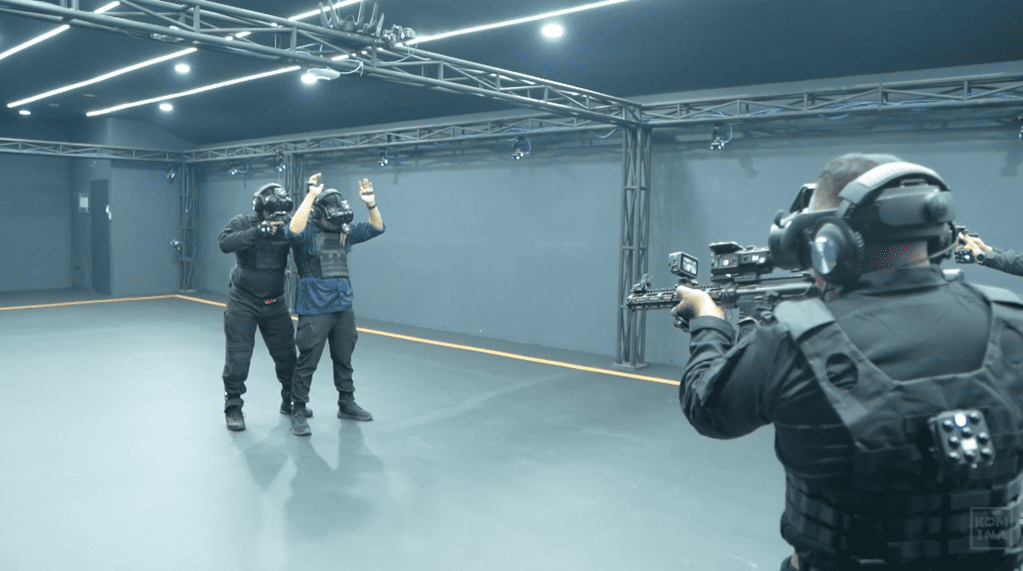
Logistics and facility costs. Organizing large-scale field exercises requires site preparation, transportation, temporary infrastructure, and coordination overhead that accumulates quickly. KOMINA’s arena-based system operates within a permanent facility. The scenarios come to the facility, rather than the unit traveling to the scenario.
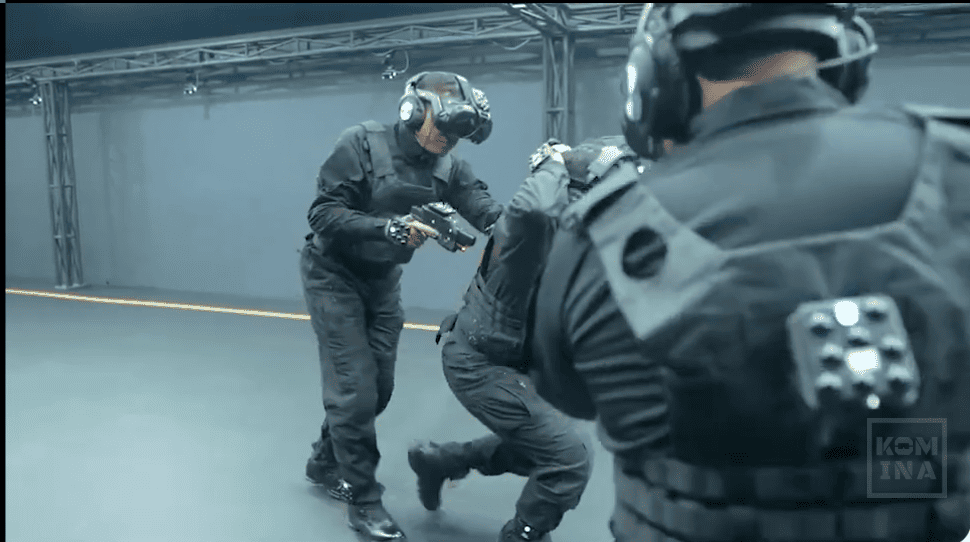
Injury-related costs. High-intensity training carries injury risk. When personnel are injured in training, the costs extend beyond medical treatment to include reduced readiness, reassignment of duties, and in some cases, long-term disability and pension implications. Virtual training for military and law enforcement eliminates the physical risk of live scenarios, which carries actuarial value that isn’t always captured in direct training cost comparisons.
Reset time. In live training, resetting a scenario after completion or after an error requires physical repositioning of personnel, equipment, and targets — often taking longer than the scenario itself. In KOMINA, a scenario resets in seconds. The ratio of active training time to total training time is dramatically higher in VR.
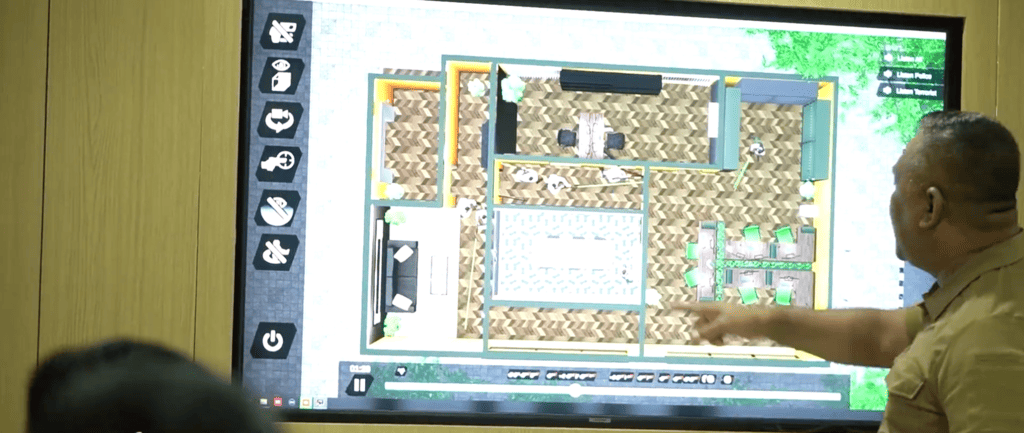
Instructor-to-trainee ratio. KOMINA’s Instructor Mode allows a single instructor to monitor multiple trainees simultaneously, with richer data than conventional observation provides. This means fewer instructor-hours are required to deliver equivalent training depth.
What the Numbers Don’t Capture
Cost reduction is the quantifiable case. But organizations that have deployed KOMINA consistently identify benefits that are harder to put a number on — and that they consider equally or more important.
Training accessibility. Certain scenarios are categorically inaccessible in live training — not because of cost, but because of safety. A realistic VVIP protection exercise with active hostile threat simply cannot be run live without unacceptable risk. Hostage rescue in a populated building cannot be rehearsed with real civilians. Drug raid operations in realistic urban environments cannot be practiced in actual neighborhoods. KOMINA makes these scenarios trainable for the first time, regardless of what they would cost in live format.
Repetition without escalating risk. The physiological and tactical skills that operational readiness requires are built through repetition. In live training, each repetition carries risk and cost, which limits how many repetitions are realistically available to any individual trainee. In KOMINA, repetitions are essentially unlimited. Trainees can run the same critical decision scenario dozens of times, building the automatic response patterns that high-pressure situations demand.
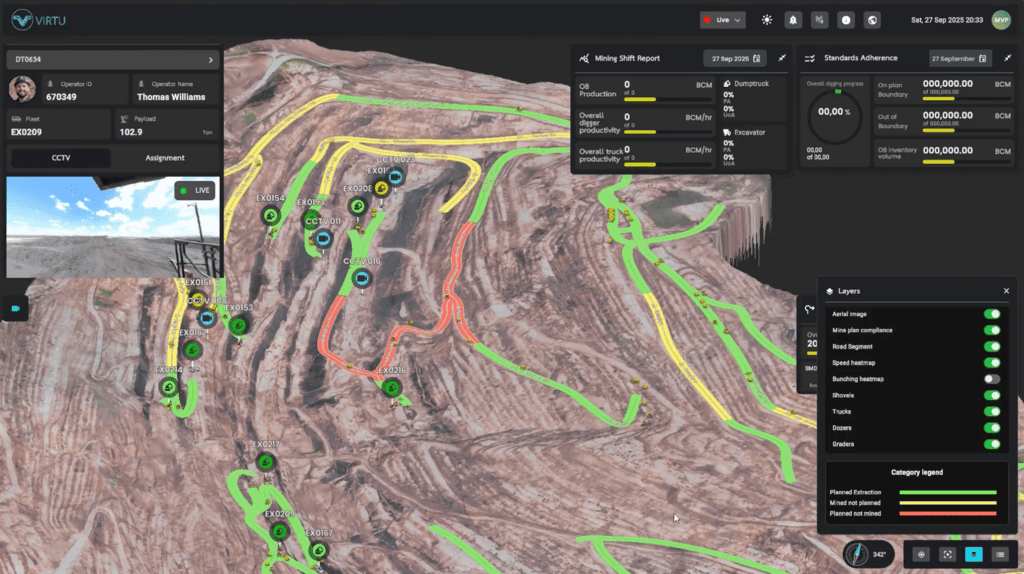
Objective performance baselines. Most defense organizations have a reasonable understanding of unit readiness based on traditional training records, exercise results, and instructor assessments. What they typically lack is granular, longitudinal data on individual and team performance across specific tactical skill domains. KOMINA generates this data automatically. Over time, it produces an objective capability profile — not just “this unit passed their last exercise,” but “this team’s reaction time under stress has improved by 18% over six months, their communication efficiency under reduced visibility is still below target, and three specific personnel are showing stress response patterns that suggest they need additional pressure inoculation.”
This information changes how organizations allocate their training resources. It allows targeted investment in specific skill gaps rather than uniform repetition of standardized curricula.
The readiness gap. Between major training exercises, personnel readiness degrades. Skills attrite without practice. KOMINA’s accessibility — it doesn’t require a field site, doesn’t require significant logistical setup, can be run in a facility — allows training to happen continuously rather than episodically. The curve between peak readiness after a major exercise and the inevitable decline over subsequent months can be flattened significantly through regular KOMINA sessions.
The Adoption Trajectory Across Southeast Asia
With more than 50 military units and 10,000+ personnel trained through the platform, KOMINA’s footprint in Southeast Asian defense training is already substantial.
The trajectory is accelerating. As the first wave of adopting organizations accumulates performance data and cost comparison records, the procurement case for peer organizations becomes increasingly concrete. Procurement officers who were evaluating the technology based on vendor presentations are now evaluating it based on the verified records of neighboring units.
This dynamic — early adopter data maturing into verified proof — is typically what drives mainstream adoption of any significant technology in the defense sector. KOMINA is at that inflection point now.
The Real Question
The question isn’t whether virtual training for military and law enforcement is worth adopting. The data from organizations that have deployed it makes that case clearly and repeatedly.
The question, for organizations still evaluating, is a different one: what does it cost to delay?
Every training cycle that runs without KOMINA’s analytical depth generates data that doesn’t exist. Every scenario that can’t be run safely in live format is a gap in preparation. Every month of personnel readiness degradation between major exercises is operational capability that could have been maintained.
The ROI conversation in defense technology is rarely just about return on investment. It’s about the cost of unpreparedness — a cost that, in the contexts that KOMINA’s clients operate in, is measured in terms that no procurement spreadsheet fully captures.
See how KOMINA has transformed training programs across Southeast Asia at https://komina.co/